
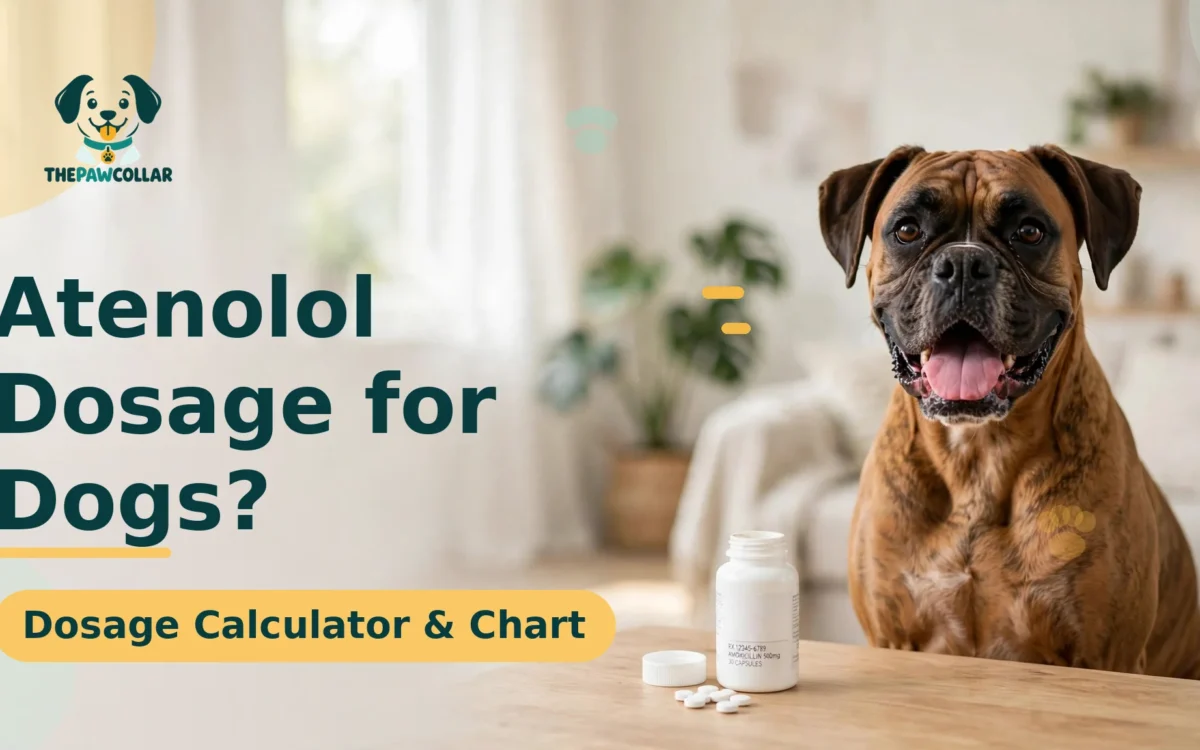
Atenolol Dosage for Dogs: Calculator, Chart & Safe Dosing Guide
If your veterinarian has just diagnosed your dog with a heart condition, the prescription in your hand may be atenolol, and your first question is almost certainly how much atenolol can I give my dog? Atenolol is a beta-blocker, a class of heart medication that slows the heart rate and reduces the heart’s workload. Vets prescribe it for certain heart rhythm problems, high blood pressure, and some forms of heart disease in dogs. Because it directly affects how hard and fast the heart beats, the dose has to match your dog’s weight, condition, and overall health precisely.
This guide gives you a weight-based atenolol dosage calculator and a dosing chart by weight, plus clear explanations of how atenolol works, how to give it, side effects to watch for, drug interactions, and what to do in an overdose. Use these tools as a starting reference — your veterinarian must confirm the exact dose before your dog takes atenolol. Never start, stop, or adjust a heart medication on your own; abrupt changes can be dangerous.
Quick answer: Atenolol dosing for dogs is weight-based and typically given once or twice daily, with the exact amount set by your veterinarian based on your dog’s heart condition, weight, and other medications. Use the calculator and chart below to estimate, then confirm with your vet before dosing. Never stop atenolol suddenly.

Key Takeaways
- What it is: Atenolol is a beta-blocker heart medication that slows heart rate and reduces the heart’s workload in dogs with certain heart rhythm problems, high blood pressure, or heart disease.
- How it’s dosed: Dosing is weight-based, usually given once or twice daily, the exact amount and frequency must be set by your veterinarian.
- How often: Most dogs take it on a regular ongoing schedule; consistency matters, and missed doses have a specific protocol (below).
- Key warning: Never start or stop atenolol abruptly. Sudden withdrawal can cause a dangerous rebound in heart rate and blood pressure. Always taper under veterinary supervision.
- When to call the vet: Call immediately for collapse, fainting, extreme lethargy, breathing difficulty, or signs of very low blood pressure after dosing.
On This Page
Atenolol Dosage Calculator for Dogs
Short answer: Use the calculator below to convert your dog’s weight and your vet’s prescribed dose into an exact per-dose amount. Then confirm it with your veterinarian before dosing.
Atenolol Dosage Calculator for Dogs
Enter your dog’s weight and the atenolol dose recommended by your veterinarian.
Enter the dose specifically recommended by your veterinarian.
Here’s how the calculator works: enter your dog’s current weight (toggle between pounds and kilograms), select whether you’re following your vet’s prescribed dose, then type in the exact dose rate your veterinarian gave you. The calculator multiplies it out into a per-dose milligram amount with a per-kg/per-lb breakdown. It does not suggest a dose, for a heart medication like atenolol, only your vet’s diagnosis, blood pressure readings, and follow-up exams can determine the right amount.
Because heart medication is long-term, weigh your dog on a consistent scale and keep a simple log of doses given, especially if more than one person in the household administers them. That log is gold for your vet at recheck visits.
Atenolol Dosage Chart for Dogs by Weight
Short answer: A weight chart shows how per-dose milligrams scale with body weight, but atenolol dosing also depends on the heart condition being treated, so every figure must be confirmed by your veterinarian.
| Weight Bracket | Approximate Dose Per Administration | Typical Frequency |
|---|---|---|
| 5–10 lb | [X mg. Confirm with your veterinarian] | [X times daily. Confirm with your veterinarian] |
| 10–20 lb | [X mg. Confirm with your veterinarian] | [X times daily. Confirm with your veterinarian] |
| 20–40 lb | [X mg. Confirm with your veterinarian] | [X times daily. Confirm with your veterinarian] |
| 40–60 lb | [X mg. Confirm with your veterinarian] | [X times daily. Confirm with your veterinarian] |
| 60–80 lb | [X mg. Confirm with your veterinarian] | [X times daily. Confirm with your veterinarian] |
| 80–100 lb | [X mg. Confirm with your veterinarian] | [X times daily. Confirm with your veterinarian] |
| 100+ lb | [X mg. Confirm with your veterinarian] | [X times daily. Confirm with your veterinarian] |
How to read the chart (mg per lb/kg explained)
Atenolol doses are expressed as milligrams per kilogram (or pound) of body weight, given per administration, for example, [X mg per lb. Confirm with your veterinarian] per dose. You multiply that rate by your dog’s weight to get the amount per dose, then give it at the frequency your vet prescribed (often once or twice daily). The chart above shows the structure of how doses scale across brackets; treat every number as a placeholder until your vet reviews this guide.
Two things make atenolol different from many other drugs: vets often start low and adjust upward based on response (blood pressure, heart rate, and how the dog feels), and the dose is tuned to the specific condition, a dog with a rhythm problem may not get the same regimen as a dog with hypertension. That’s why a chart alone can never replace the prescribing vet.
Small vs. large breed notes
Small dogs: tablet strengths rarely match small-dog doses exactly, so your vet may have you split tablets or use a compounded formulation. Use a pill splitter for clean halves. Crumbled fragments are not a reliable dose. Toy breeds with heart conditions need especially careful titration; watch closely for lethargy or wobbliness after each dose change.
Large and giant breeds: big dogs may take multiple tablets per dose. A weekly pill organizer (one compartment per dose) helps prevent the most common large-dog error: two family members each giving the morning dose. Giant breeds with heart disease should be re-weighed regularly, since cardiac cachexia (muscle wasting) can change their weight, and their dose needs, over time.
What Is Atenolol for Dogs?
Short answer: Atenolol is a beta-blocker: it blocks beta-adrenergic receptors in the heart, slowing the heart rate and lowering blood pressure so the heart works less hard.
Think of it this way: adrenaline tells the heart to beat faster and harder. Atenolol blocks some of those signals, so the heart beats more slowly and with less force. That reduces the heart’s oxygen demand, which matters a great deal in a heart that’s already struggling, and it helps bring down elevated blood pressure. Because it targets the cardiovascular system directly, atenolol is prescription-only and is never something to start, stop, or adjust without veterinary supervision.
What conditions is atenolol prescribed for in dogs?
Veterinarians commonly prescribe atenolol for:
- Supraventricular tachyarrhythmias. Abnormally fast heart rhythms originating above the ventricles; atenolol helps slow and control the rate.
- Hypertension (high blood pressure). Either primary or secondary to conditions like kidney disease.
- Certain forms of heart disease, including some cases of hypertrophic cardiomyopathy, where slowing the heart improves how it fills and pumps.
- Thyrotoxicosis-related heart signs. Sometimes used to control rapid heart rate while the underlying thyroid issue is treated.
Heart medications are often used in combination, since different drugs help the heart in different ways. Your vet may pair atenolol with other cardiac drugs, for example, many heart-failure protocols include medications like cardisure dosage chart for dogs covers pimobendan, and you can read whether is pimobendan safe for dogs in our dedicated guide. Never combine heart medications without your vet’s explicit plan.
How to Give Atenolol to Your Dog
Short answer: Atenolol is given by mouth as a tablet, usually once or twice daily on a consistent schedule. Give it the same way at the same times each day.
Available forms
Atenolol for dogs is most commonly dispensed as oral tablets in standard human tablet strengths (which is why your vet does the weight math for you). Some dogs do better with:
- Compounded liquid or chews, for dogs that can’t be pilled or need doses that don’t match tablet strengths.
- Tablet splitting, when your vet specifically instructs it; use a pill splitter, not your fingers or a knife.
Do not switch between tablet brands, generic manufacturers, or compounded products without telling your vet. Absorption can vary, and heart medication is not the place for surprises.
With or without food?
Atenolol can generally be given with or without food, but consistency is what matters: pick one way and stick with it. Giving it the same way every day keeps absorption, and therefore the effect on the heart, as steady as possible. Most owners find giving it with a small meal or treat is easiest and gentlest on the stomach.
Missed dose protocol
Missing a heart medication dose is stressful, but the rules are simple:
- If you remember soon after the scheduled time, give the dose right away.
- If it’s almost time for the next dose, skip the missed one and give the next dose on schedule.
- Never double up to make up for a missed dose.
- Never stop suddenly because you missed doses. Call your vet for instructions on getting back on track.
Keep a dosing log on the fridge or in your phone. With twice-daily medications, “did someone already give it?” is the question that causes the most accidental double doses.
Atenolol Side Effects in Dogs
Short answer: The most common side effects relate to the drug doing its job a bit too well. Low heart rate, low blood pressure, and lethargy, plus occasional digestive upset.
Because atenolol slows the heart, many of its side effects are extensions of its intended effect. Watch for:
- Lethargy or exercise intolerance, your dog tires more easily or seems “flat.”
- Slow heart rate, your vet can teach you to check your dog’s pulse at home.
- Low blood pressure signs. Weakness, wobbliness, or fainting.
- Decreased appetite or mild digestive upset
- Cold extremities. Reduced circulation to paws and ears in some dogs.
Some tiredness in the first days of treatment can be normal as the body adjusts, but it should be mild and should not get worse. Any side effect that is severe, sudden, or worsening is a reason to call the vet the same day.
When to call your vet immediately
Call your veterinarian right away, or go to emergency care, if your dog shows:
- Fainting, collapse, or seizure-like episodes
- Extreme weakness or inability to stand
- Labored or very slow breathing
- Pale or bluish gums
- A pulse that feels dangerously slow or irregular
- Any sudden worsening after a dose increase
Warnings, Contraindications & Drug Interactions
Short answer: Atenolol is not for every heart patient. Dogs with certain slow heart rhythms, severe heart failure, asthma-like airway disease, or low blood pressure need alternatives, and it interacts with several other drugs.
Dogs that should not take atenolol (or need extreme caution):
- Dogs with bradycardia or heart block, a heart that’s already too slow should not be slowed further.
- Dogs with decompensated heart failure, when the heart can’t compensate, reducing its pumping force can worsen the situation.
- Dogs with significant airway disease. Beta-blockers can tighten airways; dogs with asthma-like conditions are at risk.
- Dogs with low blood pressure. Atenolol lowers it further.
- Pregnant or nursing dogs. Only on explicit veterinary approval.
- Puppies. Heart conditions in young dogs need specialist-level (cardiologist) dosing decisions.
The abrupt-stop warning: this deserves repeating. Stopping atenolol suddenly can cause rebound tachycardia (dangerously fast heart rate) and blood pressure spikes. If the drug needs to be discontinued, your vet will taper it gradually. If you run out of tablets, call your vet immediately rather than skipping doses. This is one medication where an emergency refill call is justified.
Drugs that interact with atenolol
Atenolol interacts with a meaningful list of medications, which is why your vet needs the complete medication history. Notable interactions include:
- Other blood pressure or heart drugs. Combined effects can drop heart rate or blood pressure too far. If your vet is considering adding an ACE inhibitor such as in how much fortekor can i give my dog, or a drug like cardalis dosage for dogs, the combination must be carefully balanced.
- Calcium channel blockers. Can compound the heart-slowing effect.
- Certain anesthetics and sedatives. Tell any vet or specialist about atenolol before procedures.
- Insulin and diabetes drugs. Beta-blockers can mask the signs of low blood sugar.
- Some airway medications. May work against each other.
Bring every medication, supplement, and preventive to each cardiology recheck, including anything new since the last visit.
Atenolol Overdose in Dogs
Short answer: An atenolol overdose is a true emergency. Dangerously slow heart rate and low blood pressure can be life-threatening. Call your vet or poison control immediately.
Because atenolol’s whole job is slowing the heart, an overdose amplifies that effect to dangerous levels. Overdoses happen through double dosing (two household members), a dog getting into the pill bottle, or a dosing math error.
Possible signs of overdose include:
- Profound lethargy, weakness, or collapse
- Very slow or irregular heartbeat
- Difficulty breathing
- Pale, gray, or bluish gums
- Seizures
- Unresponsiveness
What to do:
- Keep your dog still, calm, and warm. Don’t try to make them walk around.
- Call your veterinarian or the ASPCA Animal Poison Control Center at (888) 426-4435 (a consultation fee may apply) immediately.
- Have the packaging with you: product name, tablet strength, and your best estimate of how many were taken.
- Do NOT induce vomiting or give food, water, or home remedies unless specifically directed.
- Get to an emergency veterinary clinic at once. Atenolol overdose often needs IV treatment and monitoring that can’t be done at home.
Related Articles
Frequently Asked Questions
How much atenolol for a 10 lb dog?
Dosing is weight-based and varies by condition. A 10 lb dog needs a proportionally smaller dose than a larger dog. Use the dosage chart and calculator in this post as a starting reference, then confirm the exact dose with your veterinarian before giving atenolol to your dog.
How much atenolol for a 50 lb dog?
Dosing is weight-based and varies by condition. A 50 lb dog’s dose is calculated from their weight multiplied by the vet-confirmed dose rate. Use the calculator above with your vet’s figure, and confirm the final amount with your veterinarian.
Can I give my dog atenolol?
Only if your veterinarian has prescribed it for your dog’s specific heart condition. Atenolol is a prescription heart medication. Never start it without veterinary guidance, and never share one dog’s prescription with another.
Is atenolol safe for dogs?
Atenolol is commonly prescribed by veterinarians, but safety depends on your dog’s health, age, and other medications. Never start it without veterinary guidance.
How long does atenolol take to work in dogs?
Onset varies by formulation and condition; your vet can tell you what improvement timeline to expect and when to follow up if you see no change. Heart rate effects begin relatively quickly after dosing, but full therapeutic assessment takes recheck exams.
What are the side effects of atenolol in dogs?
Watch for the common mild effects listed in the side-effects section, and contact your vet right away for serious signs like vomiting, lethargy, breathing changes, or collapse.
What should I do if my dog gets too much atenolol?
Treat it as an emergency: call your veterinarian or an animal poison-control hotline immediately and do not try home remedies unless directed.
Can I give my dog atenolol with food?
Some formulations are gentler on an empty stomach than others; follow your vet’s instructions and the administration section above. Consistency, the same way every day. Matters most.
Can puppies or pregnant dogs take atenolol?
Use in puppies, pregnant, or nursing dogs needs explicit veterinary approval. Dosing and safety margins can differ sharply.
How often can I give atenolol to my dog?
Frequency is set by your vet based on the condition being treated; do not repeat or skip doses without checking the missed-dose guidance. It is usually given once or twice daily on a strict schedule.
Atenolol vs alternatives for dogs. What are the options?
Alternatives depend entirely on the heart condition: other beta-blockers, calcium channel blockers, ACE inhibitors, or pimobendan-based protocols may be options your vet considers. Each works differently on the heart, so switching is a veterinary decision. Never substitute one heart drug for another on your own.
Final Thoughts
Atenolol is an important, widely used heart medication that helps many dogs with rhythm problems, high blood pressure, and heart disease live more comfortably, but it demands respect. The dose must be weight-based and vet-confirmed, the schedule must be consistent, and it must never be stopped abruptly. Use the calculator and chart above as your reference tools, keep up with recheck exams, and keep the lines of communication with your veterinarian open.