
Dog Ear Mites: Signs, Treatment & Home Care (Vet Guide)
If your dog is scratching at their ears, shaking their head, and leaving dark crumbly debris on the bedding, ear mites are a real possibility. The good news: ear mites are very treatable once you know what you are dealing with. This guide walks you through what ear mites are, how to tell them apart from an ear infection, how vets diagnose and treat them, and how to care for your dog’s ears at home while they heal.
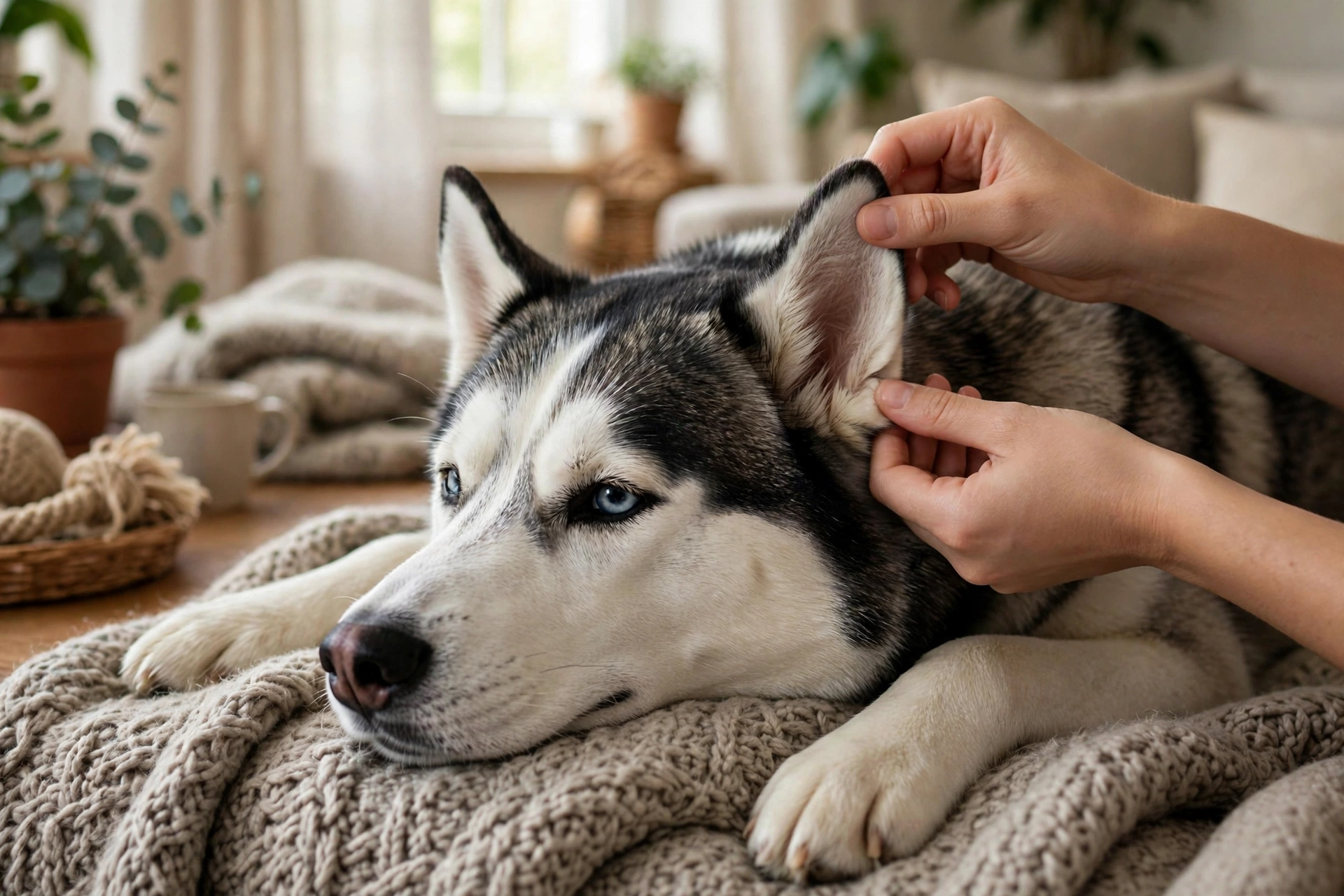
Key Takeaways
- Ear mites (Otodectes cynotis) are microscopic parasites that feed in the ear canal and cause intense itching.
- The hallmark signs are dark, coffee-ground-like debris, frequent head shaking, and scratching at the ears.
- Ear mites and ear infections often occur together, a vet exam with a microscope is the only reliable way to tell them apart.
- Effective treatment usually requires vet-prescribed medication; home cleaning alone will not eliminate mites.
- Treat all dogs and cats in the home, since ear mites spread easily through close contact.
- Regular ear checks and routine parasite prevention help keep ear mites from coming back.
- What Are Ear Mites in Dogs? (Otodectes Explained)
- Dog Ear Mites Symptoms: Signs to Watch For
- How Vets Diagnose Ear Mites in Dogs
- Treatment Options: Ear Mite Medicine for Dogs
- Home Care & Cleaning: How to Treat Ear Mites in Dogs Safely
- Prevention: Keeping Ear Mites Away for Good
- Frequently Asked Questions
What Are Ear Mites in Dogs? (Otodectes Explained)
Ear mites in dogs are caused by Otodectes cynotis, a tiny eight-legged parasite related to spiders and ticks. The mites are barely visible to the naked eye, about the size of a pinhead, and they live on the surface of the skin lining the ear canal, feeding on ear wax and skin oils. Although they can occasionally wander onto the skin around the ears, neck, and tail base, the ear canal is where they thrive and reproduce.
Understanding the mite’s life cycle helps explain why treatment takes commitment. Female mites lay eggs in the ear canal, and those eggs hatch into larvae, then progress through nymph stages before becoming adults. The full cycle takes roughly three weeks, which is why vets typically recommend treating for at least that long: medication needs to stay active long enough to kill newly hatched mites as well as adults.
Ear mites spread through direct contact. A puppy can pick them up from its mother, a dog can catch them from a playmate at the park, and cats are frequent carriers, so in a multi-pet household, the cat sleeping on your dog’s favorite couch can be the source of a repeat infestation. They do not jump long distances like fleas, but close contact, shared bedding, and grooming tools are all enough to pass them along.
Which Dogs Are Most at Risk?
Puppies and young dogs are the most common patients, partly because their immune systems are still developing and partly because they have close contact with littermates and their mother. Shelter dogs, strays, and dogs that spend time in boarding or daycare settings also face higher exposure. That said, ear mites can affect dogs of any age or breed, and dogs with floppy ears or narrow ear canals may develop more severe inflammation simply because their ears trap more wax and moisture, a comfortable environment for mites.
One thing worth knowing: ear mites are a dog-and-cat problem, not a human one. The mites do not infest people, so you do not need to worry about catching them from your dog. You should still wash your hands after handling your dog’s ears, since irritated ears can harbor bacteria, but the mites themselves will not set up home on you.
Dog Ear Mites Symptoms: Signs to Watch For
Dog ear mites symptoms tend to be dramatic enough that most owners notice something is wrong quickly. The classic picture is a dog that suddenly cannot leave its ears alone: vigorous scratching with the hind leg, repeated head shaking, rubbing the side of the head along the floor or furniture, and a visible increase in irritability. If your dog tilts its head or seems sensitive when you touch near the ears, that pain response is worth taking seriously.
The single most recognizable sign is the debris. Ear mites produce a dark, dry, crumbly discharge that owners almost always describe the same way: it looks like coffee grounds. You will see it coating the inside of the ear flap and deep in the canal. It is usually dry and flaky rather than wet or waxy, and it builds up quickly. Sometimes within a day or two of cleaning. Some dogs also develop a scabby rash around the ears, neck, or tail base from mites that have wandered, plus hair loss and red, thickened skin where they have been scratching the hardest.
Smell is another clue, though it points more toward a secondary infection than the mites themselves. Mites damage the skin lining the ear canal, and that damaged skin is an open door for bacteria and yeast. A yeasty, musty, or sour odor from the ears suggests an infection has moved in alongside the mites, which is extremely common and is one of the reasons a vet visit matters even when you are fairly sure mites are the culprit.
How Do I Know If My Dog Has Ear Mites? A Quick Home Check
You cannot diagnose ear mites at home with certainty, but you can do a quick check that tells you whether a vet visit is urgent. Gently fold back your dog’s ear flap and look inside with a flashlight. You are looking for three things: dark coffee-ground-like debris, redness or swelling of the canal, and any strong odor. If you see all three, or if your dog cries out when you touch the ear. Call your vet rather than trying to manage it yourself. If the ear looks mostly clean with just a little light-brown wax and your dog is only mildly itchy, a vet visit is still wise, but it is less of an emergency.
Dog Ear Infection vs Ear Mites: Telling the Difference
Ear mites and ear infections cause overlapping symptoms, and, to make things trickier. They frequently occur at the same time. Still, there are patterns that point one way or the other:
| Feature | Ear Mites | Ear Infection (Bacterial/Yeast) |
|---|---|---|
| Debris | Dark, dry, crumbly, like coffee grounds | Yellow, brown, or greenish; often wet or waxy |
| Odor | Usually mild until infection sets in | Often strong, musty, or sour |
| Itching | Intense scratching and head shaking, often both ears | Can be one ear or both; may be painful more than itchy |
| Pain | Irritation and sensitivity | Can be severe. Crying, head tilt, reluctance to chew |
| Response to cleaning | Debris returns within a day or two | May improve temporarily with cleaning alone |
| Confirmation | Mites visible under microscope | Cytology shows bacteria or yeast |
The practical takeaway: do not try to decide on your own. Many owners treat for mites when the real problem is a yeast infection, or vice versa, and the wrong approach delays healing. A vet can sort it out in minutes with a swab and a microscope.
How Vets Diagnose Ear Mites in Dogs
A vet diagnoses ear mites through a combination of the physical exam and a quick laboratory check, and the whole process usually takes just a few minutes. Your vet will start by examining the ears with an otoscope, a lighted instrument that lets them see deep into the ear canal. In some cases, mites are actually visible this way as tiny white specks moving against the dark debris, though many infestations need the next step to confirm.
That next step is the ear swab and cytology. Your vet gently collects a sample of the debris with a cotton swab, mixes it with mineral oil on a glass slide, and examines it under a microscope. Ear mites are unmistakable at magnification, your vet will see the mites, their eggs, or both. This same slide also reveals whether bacteria or yeast are present, which determines whether your dog needs an antibiotic or antifungal ear product in addition to the mite treatment.
What to Expect at the Appointment
Bring notes on what you have observed: when the scratching started, whether one or both ears are affected, what the debris looks like, and whether any other pets in the home are itchy. Your vet will check the eardrum’s condition too, because a damaged eardrum changes which ear products are safe to use. This is one of the key reasons ear medications should not be chosen without an exam. Expect the vet to look at your other pets’ ears as well, or at least recommend they be examined, since ear mites spread so easily between animals in the same home.
If your dog is in significant pain, the vet may sedate lightly to examine and clean the ears thoroughly. Do not worry. This is routine, and it lets the vet get a clear look at the canal and eardrum without causing your dog distress. After diagnosis, you will leave with a treatment plan, an ear-cleaning demonstration, and usually a recheck appointment to confirm the mites are gone.
Treatment Options: Ear Mite Medicine for Dogs
Effective ear mite medicine for dogs comes in two broad forms: products applied directly into the ears, and systemic parasite treatments that work through the bloodstream. Your vet chooses based on the severity of the infestation, whether infection is present, your dog’s age and health, and how cooperative your dog is with ear handling. There is no single “best” product for every dog, the best treatment is the one your vet selects after examining your dog’s ears.
Topical ear products designed to kill mites are the traditional approach. These are applied directly into the ear canal after cleaning, and they work by killing mites on contact. Many also contain ingredients that soothe inflammation. Your vet will show you the correct technique: filling the canal, massaging the base of the ear to distribute the product, and letting your dog shake out the excess. Because the mite life cycle runs about three weeks, treatment usually continues for several weeks to catch newly hatched mites. Stopping early is the most common reason infestations return.
Systemic treatments are newer options that many vets now prefer, especially for dogs that resent ear handling. Certain monthly parasite preventives in the isoxazoline class are labeled or used to treat ear mites, working through the bloodstream so mites are killed when they feed. These have the added benefit of covering fleas and ticks at the same time. Your vet may recommend this route for multi-pet households, since it is easier to make sure every animal gets a full course.
When a secondary bacterial or yeast infection is present, and it often is, your vet will prescribe an additional ear product to address it. Combination ear medications that pair antimicrobial ingredients with anti-inflammatory components are common here. For example, your vet might discuss whether a product like is entederm safe for dogs in your dog’s specific situation, particularly if the eardrum needs checking first. Similarly, if inflammation is severe, the vet may consider options and explain the betagen dosage chart for dogs so you understand exactly how the prescribed course is structured. In stubborn or recurrent cases, vets sometimes reach for specialized ear suspensions, your vet can walk you through how much easotic can i give my dog if that product is chosen for a complicated ear.
Why Treating All Pets Matters
Ear mites are highly contagious between pets. If you treat only the itchy dog while the cat shares the couch, the mites simply move back and forth, and you will be fighting the same infestation for months. Vets routinely recommend treating every dog and cat in the household at the same time, even the ones that look fine. Asymptomatic carriers are common. Wash bedding, blankets, and any fabric your pets sleep on in hot water, and clean grooming tools, to remove mites and eggs from the environment.
How Long Until They Are Gone?
With consistent treatment, most dogs show clear improvement within the first week or two: less scratching, less head shaking, and cleaner ears. Full resolution typically takes about a month, matching the mite life cycle. Your vet will usually schedule a recheck with a repeat ear swab to confirm the mites are truly gone before stopping treatment. Do not stop early just because your dog looks better, the remaining eggs will hatch, and the cycle starts over.
Home Care & Cleaning: How to Treat Ear Mites in Dogs Safely
Home care supports veterinary treatment. It does not replace it. Cleaning removes the debris that shelters mites and lets medication reach the skin where it needs to work, and it gives you a daily window to monitor healing. But cleaning alone will not kill mites or cure an infestation, so think of home care as the essential sidekick to your vet’s treatment plan, not the main event.
Start with a vet-approved ear cleaner, your vet will recommend one, and it is worth using exactly what they suggest rather than improvising. The basic technique: lift the ear flap, fill the ear canal with cleaner (do not jam the applicator tip deep inside), massage the base of the ear for 20–30 seconds until you hear a squelching sound, then step back and let your dog shake. Wipe away the loosened debris from the visible parts of the ear with cotton balls or gauze. Never use cotton swabs deep in the canal. You risk packing debris further in or injuring the eardrum.
How often should you clean? Follow your vet’s instructions, which usually means cleaning before each medication application during the treatment phase, then tapering to a maintenance routine. Over-cleaning can irritate the canal and slow healing, so more is not always better. Watch for warning signs during cleaning: if your dog cries, the ear bleeds, the discharge suddenly changes color, or a foul smell develops, stop and call your vet.
Home Remedy for Dog Ear Mites: What Actually Helps (and What Does Not)
You will find plenty of home remedy suggestions online. Mineral oil, olive oil, diluted vinegar, and various herbal rinses. Here is the honest picture: oil can smother some mites on contact and may ease itching temporarily, which is why the idea persists. But oil does not reliably kill eggs, does not reach mites deep in the canal, and does nothing about the bacterial or yeast infections that so often accompany mites. Vinegar and other acidic rinses are worse: applied to an already raw, inflamed ear canal, they sting badly and can cause real pain.
The safest “home remedy” is simply good nursing care: keep the ears clean with a vet-approved cleaner, prevent scratching damage (an e-collar or soft recovery collar helps if your dog is tearing at the ears), keep bedding clean, and make sure every pet in the home is treated. Save the experimentation for things that cannot hurt your dog. Ear mite treatment is not one of them.
Things to Avoid During Treatment
- Do not use old or leftover ear medications from a previous pet or a previous ear problem, the wrong product can be harmful, especially if the eardrum is damaged.
- Do not use hydrogen peroxide, alcohol, or undiluted vinegar in the ears; they irritate inflamed tissue and cause pain.
- Do not dig at the ears with cotton swabs or any pointed object.
- Do not stop treatment early because the ears look better. Finish the full course your vet prescribed.
- Do not bathe or swim with your dog during treatment unless your vet says it is fine; trapped moisture feeds secondary infections.
Prevention: Keeping Ear Mites Away for Good
Preventing ear mites is mostly about two habits: regular ear checks and consistent parasite prevention. Make ear inspection part of your routine. Once a week, fold back the ear flaps and look for early debris, redness, or odor. Catching the first signs of coffee-ground debris early means a quicker vet visit and a shorter treatment course. This is especially important if your dog plays with other dogs, visits daycare or boarding, or lives with cats.
Many monthly parasite preventives that cover fleas and ticks also protect against ear mites, so a dog on year-round prevention is already partially shielded. Ask your vet whether your current preventive covers ear mites. Not all of them do, and coverage varies by product. For multi-pet homes, keeping every animal on prevention closes the loop that lets mites bounce between pets.
Environmental hygiene helps too. Wash bedding regularly in hot water, clean grooming tools between pets, and be cautious about nose-to-nose contact with unknown dogs whose ear health you cannot verify. If you foster or adopt, have every new animal’s ears checked at the intake vet visit. Shelter and rescue animals have higher ear mite rates, and an early exam prevents an infestation from spreading through your whole household.
Finally, keep up with routine vet checkups. Ears are part of every wellness exam, and your vet can spot the earliest debris or inflammation long before you would notice scratching at home. Dogs prone to recurrent ear problems may benefit from a maintenance ear-cleaning schedule your vet designs for their specific ear shape and history.
Related Articles
Frequently Asked Questions
How do I know if my dog has ear mites?
Dark coffee-ground-like debris, intense scratching, and head shaking are the classic signs of ear mites in dogs. A foul odor or discharge may mean a secondary infection is also present. Only a vet can confirm the diagnosis, an ear swab examined under a microscope shows the mites clearly. Do not guess; the wrong treatment delays healing.
Can I treat dog ear mites at home?
Cleaning helps, but effective treatment usually needs vet-prescribed medication to kill mites and resolve infection. Home cleaning with a vet-approved ear cleaner supports the medication by removing debris, but oil, vinegar, or over-the-counter rinses alone will not eliminate an infestation. See your vet for a proper treatment plan.
What is the best ear mite treatment for dogs?
The best ear mite treatment for dogs is the one your vet prescribes after examining the ears. Typically a topical acaricidal ear product, a systemic parasite treatment, or both, plus medication for any secondary infection. Choice depends on your dog’s age, health, eardrum condition, and how the ears respond. Finish the full course even once symptoms improve.
Can ear mites go away on their own in dogs?
No. Ear mites reproduce in the ear canal and will not clear up without treatment. Left alone, they cause worsening inflammation, painful scratching damage, and often secondary bacterial or yeast infections. They also spread to other pets in the home. Prompt veterinary treatment resolves most infestations within a few weeks.
Final Thoughts
Ear mites are unpleasant but very beatable. The pattern that works is simple: notice the signs early, get a proper diagnosis, treat with what your vet prescribes, clean the ears gently at home, and treat every pet in the household. Most dogs are back to their comfortable, head-shake-free selves within a few weeks, and with regular ear checks and parasite prevention, you can keep it that way.
Disclaimer: This article is for informational purposes only and is not a substitute for professional veterinary advice, diagnosis, or treatment. Ear medications and dosing must be confirmed with your own veterinarian, who can examine your dog’s ears and eardrums before recommending anything. If your dog is in pain, bleeding from the ears, or suddenly worse, contact your veterinarian or an emergency clinic promptly.